


Many parents worry about one thing more than anything else.
“Is my child falling behind with reading?”
It’s a fair concern. Reading is complex. It asks a lot from young brains.
Before children can read confidently, they need to build skills that sit underneath reading itself.
Listening is one of them.
Listening is not a shortcut
It’s a foundation
When children listen to stories, they practise:
- understanding structure
- following sequences
- recognising new words
- hearing correct pronunciation
- holding attention over time
These are the same skills reading relies on later.
A child who listens well is often more ready to read than one who is pushed too early.
Why audiobooks work so well for children
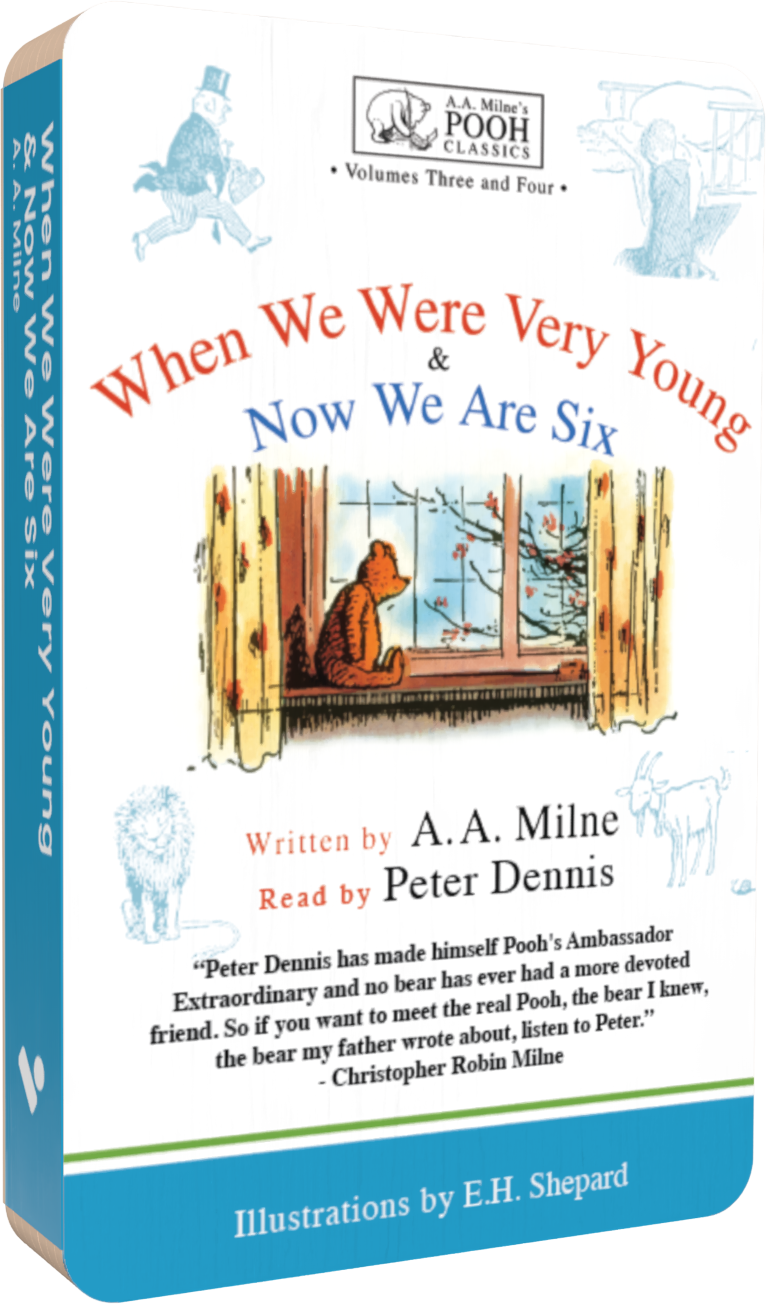
Audiobooks give children access to stories that are often beyond their reading level.
That matters.
It means they can enjoy richer language, bigger ideas, and longer narratives without struggling through text they’re not ready for yet.
Instead of frustration, they experience confidence. Instead of pressure, they experience enjoyment.
And enjoyment is what builds habits.
Screen-free listening changes the experience
Not all listening is equal.
Listening on a screen often comes with distractions. Buttons. Notifications. Visual noise.
Screen-free listening is different.
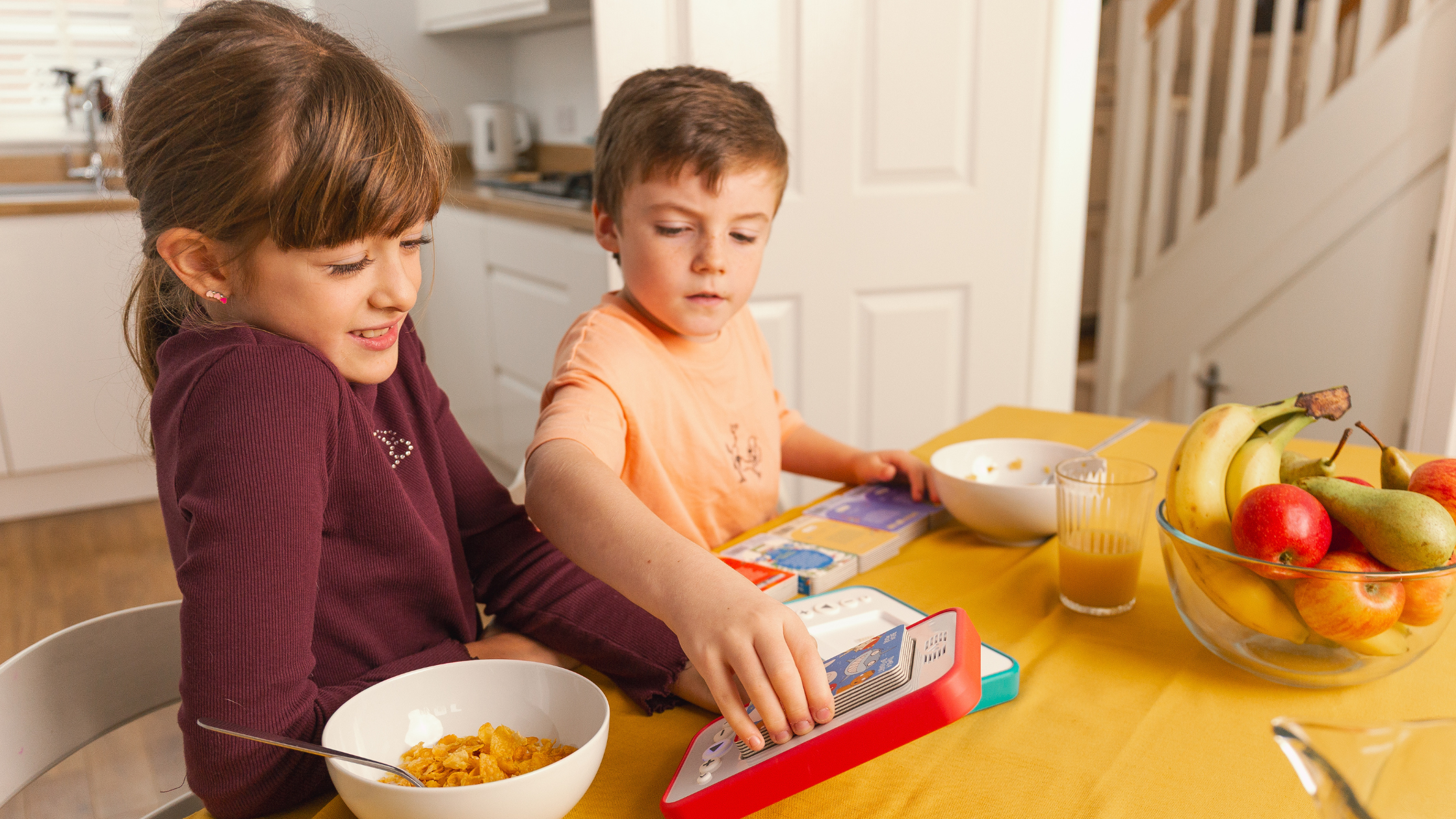
When a child presses play on a physical audiobook, their focus stays on the story.
There’s no temptation to swipe. No app to exit. No video to steal attention.
Just listening.
That simplicity helps children:
- settle more easily
- stay with a story for longer
- imagine scenes for themselves
- relax into the experience
It also gives parents peace of mind.
Listening builds independence
One of the most overlooked benefits of listening is independence.
Children don’t need help to enjoy a story. They don’t need to ask for a screen. They don’t need an adult to read every page.
They can choose a story and start it themselves.
That sense of control matters.
It builds confidence. It builds routine. It builds ownership of reading time.
What schools and teachers see first-hand
Teachers have known this for years.
Listening helps children who:
- struggle with reading
- lack confidence
- are learning English
- need calmer moments in the day
Stories create shared experiences without pressure.
No child is singled out. No child is left behind. Everyone listens together.
Listening and reading work best together
Listening is not a replacement for reading.
It’s a partner.
Children who listen to stories often become more curious about books.
They recognise characters. They want to see the words. They want to try for themselves.
Listening builds the bridge.
A simple place to start
If reading feels like a struggle right now, that’s okay.
Start with listening.
Let stories lead. Let curiosity grow. Let confidence build.
The reading will follow.
Falling behind isn’t about where a child is today. It’s about whether they’re building the skills that help them move forward.